


Third Shift
Date
11/12/2025
Feature Film
NORTH MACEDONIA
Director
Ana Opacic
Producer
Slobodan Trajkovski
Total Budget
€450.000
Links Material
Director Contact
anaopacick@gmail.com
Producer Contact
peakproduction@outlook.com
Secured Budget
€306.000
Synopsis
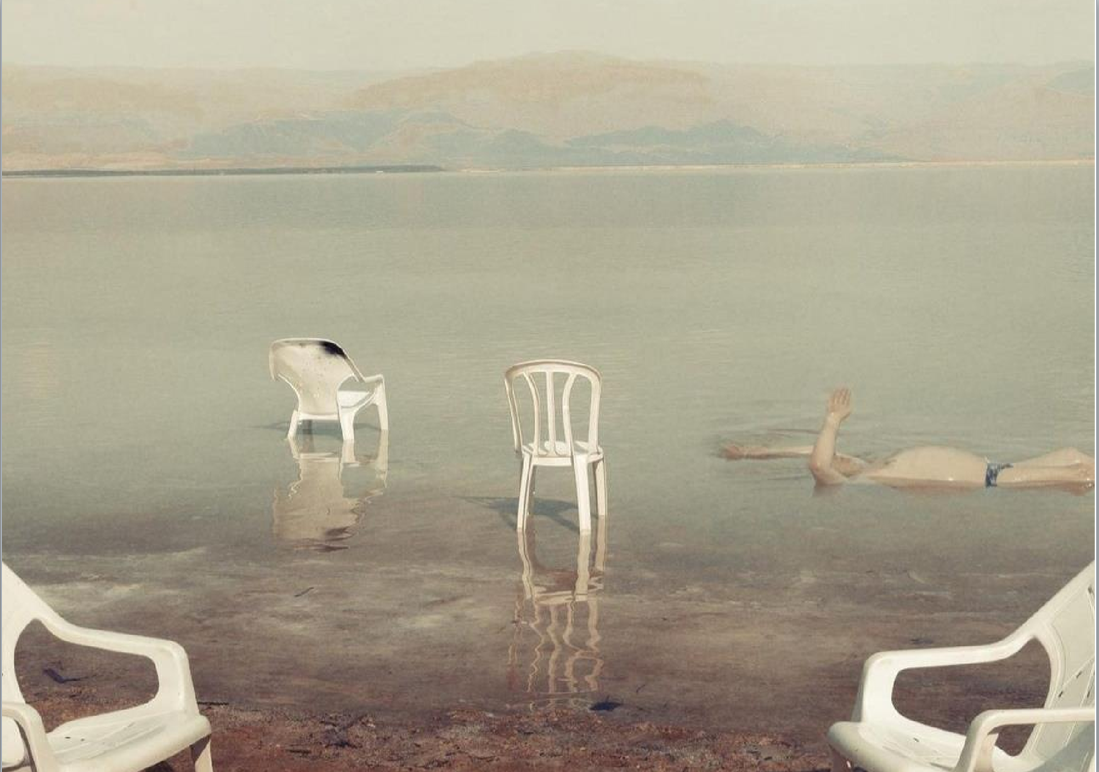
On the shores of Prespa Lake, in the tiny village of Pretor with barely a hundred inhabitants—and more pelicans than people—sixty-five-year-old Milan, professor of percussion, returns after suffering a stroke. The collapse was triggered by a confrontation with one of his students, which unearthed the long-repressed trauma of his failed music career: years earlier, on the eve of an important he failed to perform the song, finishing last, while secretly mourning the death of his first wife Iskra, who had passed away just the day before. Advised by his doctor to spend time in rehabilitation outside the city, Milan arrives in his childhood village with his second wife, Tatjana, a fifty-year-old stage designer.
At the end of summer, Milan appears sour-faced yet strangely calm, trying to find meaning in the monotonous daily life of the lakeside village. His body language conveys resignation, but his mind wanders through fragmented memories of music, love, and grief. Through poetic encounters and misunderstandings with the locals, and through the dominant visual narration of the Prespa landscape—almost a character in itself—we witness the timeless destinies of a place forgotten by urban noise. The village, with barely thirty houses, a shop, a restaurant, and an abandoned hotel, is inhabited mostly by the elderly, whose eccentricities lend a peculiar rhythm to Milan’s rehabilitation.
Milan’s closest confidant becomes Kosta, a seventy-year-old hunter and mushroom picker who lost his house in a fire years ago and now lives in a trailer by the lake. In their long walks through the forest, Kosta gently draws Milan out of his solitude. They talk about childhood, and though their lives have been spent in different cities, Kosta remains the one person who truly understands him. Together they drive in an old Renault 4 to the nearby spa for herbal treatments—therapy less for the body than for Milan’s fragile spirit. Tatjana, worried about her husband’s deep melancholy, invites his estranged daughter Maša, now living abroad, to visit. Their nights of sleepless wandering and aimless drives reveal how distant their lives have become, and how much remains unspoken between them. When news arrives of the sudden death of Milan’s best friend from Skopje, his fragile balance finally shatters.
The story culminates with the villagers’ annual autumn celebration, staged in front of the derelict hotel. An improvised program of clumsy performances, lottery, and karaoke fills the night. At last, Milan steps onto the stage. After a long silence, he gazes into the audience—where he imagines his childhood friends, still young—and takes the microphone. As he begins to sing the very song he once failed to perform, the film fades out. Over the closing credits, we finally hear his trembling voice, completing a circle long left open. .Set against the backdrop of a post-transition society grappling with identity, alienation, and economic precarity, the film is a haunting exploration of the new violence born at the intersection of technology, poverty, and the human need to be seen.
DIRECTOR’S NOTE
Although the topic of aging is important to all of us, many avoid thinking about aging and old age. The pressure put on us by advertisements, cosmetic and pharmaceutical industries, that a man should always be young, is also supported to a large extent by the film industry. The cult of youth is supported, with some occasional exceptions that become a precedent in film history, and scenes with old naked people are something few people want to face. And because of their fear of aging and death, it would be more appropriate for older people to be invisible and marginalized. So that old people are not ignored, they try different interventions to stay young and equal with other people. In today’s society, it is not allowed for a person to age passively, as shown by the TV commercials in which old people jump from a parachute just to show that they can still do it. Because in this society, old people are just a surplus and a burden on the state.
It wasn’t always like that, before older people were respected precisely because of their age and it was considered that it brings wisdom and experience, and today there is even an expression “ageism” which means discrimination based on age, mostly related to the older population. Ageism involves creating a negative image of older people, ignoring them, and excluding them from everyday life. The Third Shift does not confront the transience of life and the way the characters more or less manage to cope with that fact. The Third Shift combines several types of drama. Thus, we can perceive lyrical, psychological, impressionistic drama and drama of atmospheres. I think that everyone should to find his own answer and to know his own repressed problems in this wasted time that offers nothing, a time of automated chaos in which all human activities are subordinated to social automatism (remember Kafka) which, as such, reduces human activity to a bare artifact solely in the service of profit.
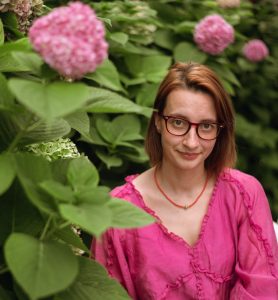
ANA OPAČIĆ
Ana Opačić, graduated from the Academy of Arts in Split majoring in Film and Video. She has a master’s degree from the University of Audiovisual Arts EFTA in Skopje (Europa Prima) in the department of Film and TV directing. She received her PhD at the Institute of Macedonian Literature at UKIM, on the topic “Author’s policies in film adaptations: Death in Venice (Luchino Visconti), Woyzek (Werner Herzog) and Mirror (Andrei Tarkovsky)”. Since 2014 she has been working as a professor at the International University for Audiovisual Arts Europa Prima in Skopje, on the subjects “Film scriptwriting” and “Dramaturgy of the Stage”. She is also a member of MFPA (Macedonian Film Professionals Association). Since 2018, she is the Founder and Director of the Festival for New European Film BEACH FILM FESTIVAL at Ohrid lake. From 2015-2019, she was a associate of the daily newspaper “Nova Makedonija” as a professional correspondent for Film. Ana Opačić has made several short films as well as exhibitions and performances of new media art. Last year, she was a panelist at the 26th Euromediterranean Conference on Cinema, held as part of the Venice Film Festival. She is currently in pre-production of her debut feature film The Third Shift, a North Macedonian–Croatian co-production..